SSL Certificate Website security .

An SSL certificate acts as a trusted third‑party verification of your website’s security. It confirms the strength of the Secure Socket Layer (SSL) encryption used when visitors connect to your site and ensures that the encrypted connection is tied to the verified owner of the domain. SSL validation is an essential part of modern web security, especially for businesses that collect customer information.


Site Builder

Why SSL certificates Matter

This section should immediately explain the value and purpose of SSL in simple, trustworthy language. It signals to Google that your page answers the core intent behind searches like:

  • “why do I need an SSL certificate”

  • “importance of SSL”

  • “SSL for website security”

    SSL certificates are essential for protecting your website and your visitors. They encrypt the data sent between a user’s browser and your server, preventing hackers from reading or stealing sensitive information. SSL also verifies that your domain belongs to a real, trusted business, helping visitors feel safe when sharing their details. Modern browsers and search engines expect every website to use SSL, and sites without it often lose trust, traffic, and ranking.

How SSL Encryption Works

SSL encryption protects data by creating a secure, private tunnel between your visitor’s browser and your website server. When someone visits your site, their browser and your server perform a quick “handshake” to agree on how to communicate safely. During this process, the SSL certificate verifies your identity and generates unique encryption keys that scramble all information sent between both sides. This means that even if someone intercepts the data, they cannot read or modify it. Every session uses fresh, temporary keys, which adds another layer of protection and prevents attackers from reusing old information.

Key steps in the SSL  process


  • Browser connects to your site and requests a secure connection.
  • Your server sends the SSL certificate, which includes your public key and identity details.
  • The browser verifies the certificate with the Certificate Authority to confirm it’s valid and trusted.
  • A secure session key is created, unique to that visitor and that moment.
  • All data is encrypted using this session key, keeping information private and tamper‑proof.

Why this matters

This process ensures that passwords, payment details, forms, and personal information cannot be stolen or altered. It also proves to visitors that your website is legitimate and safe to interact with, which directly improves trust and SEO performance.


Types of SSL Certificates Services

SSL certificates come in several levels of validation and coverage. Each type offers a different balance of security, trust, and verification, allowing businesses to choose the right protection for their website.

Domain Validated (DV)

DV certificates provide basic encryption and are issued quickly because they only verify domain ownership. They are suitable for personal websites, blogs, and small projects that do not handle sensitive customer data. While encryption is strong, identity verification is minimal.

 Organization Validated (OV)

OV certificates verify both domain ownership and business identity. Visitors can view verified company details in the certificate, which increases trust. These certificates are recommended for business websites, service providers, and platforms that collect customer information.

Extended Validation (EV)

EV certificates offer the highest level of verification and trust. They require a detailed business review and display strong trust indicators in the browser. Banks, financial institutions, and large brands typically use EV certificates to reassure users that the site is legitimate and secure.

Wildcard SSL

Wildcard certificates secure your main domain and all its subdomains under one certificate. This is ideal for businesses managing multiple sections of a website, such as blog.yourdomain.com or shop.yourdomain.com..

Multi‑Domain SSL (SAN)

SAN certificates protect multiple different domains with a single certificate. They are useful for companies managing several websites or brands under one umbrella.

Multi‑Domain Wildcard SSL

A Multi‑Domain Wildcard SSL combines the flexibility of SAN certificates with the coverage of Wildcard SSL. It allows you to secure multiple domains and all their subdomains under one certificate. This is ideal for businesses managing several websites, each with its own sub‑sections, while keeping SSL management simple and cost‑effective.
Modern laptop displaying secure connection shield with padlock icon, symbolizing SSL protection

How SSL Strengthens Overall Website Security
SSL plays a central role in protecting every interaction on your website. It ensures that data stays private, prevents attackers from tampering with information, and confirms that visitors are connecting to the real, trusted version of your site. By securing the connection from the moment a user arrives, SSL helps maintain credibility, reduce security risks, and support a safer browsing experience.
How SSL Protects Your Customers
SSL does more than encrypt data — it protects your visitors at every step of their interaction with your website. When someone enters information on your site, SSL ensures that the data is unreadable to anyone except your server. This prevents identity theft, payment fraud, and unauthorized access. By securing every form submission, login, and checkout process, SSL helps your customers feel safe and confident using your website.

HTTPS and Modern Browser Requirements
Modern browsers like Chrome, Safari, and Firefox now expect every website to use HTTPS. Sites without SSL show warnings such as “Not Secure,” which can scare visitors away instantly. SSL ensures your website loads with the trusted padlock icon, avoids browser warnings, and meets current security standards. This improves user experience and helps maintain your brand’s credibility.
SSL and Google Ranking Signals
Google uses HTTPS as a ranking factor, meaning secure websites have an advantage in search results. SSL also improves performance through HTTP/2, which can make your pages load faster. Faster, secure websites tend to have lower bounce rates and higher engagement — both of which help your SEO. Adding SSL is one of the simplest ways to strengthen your overall search visibility.
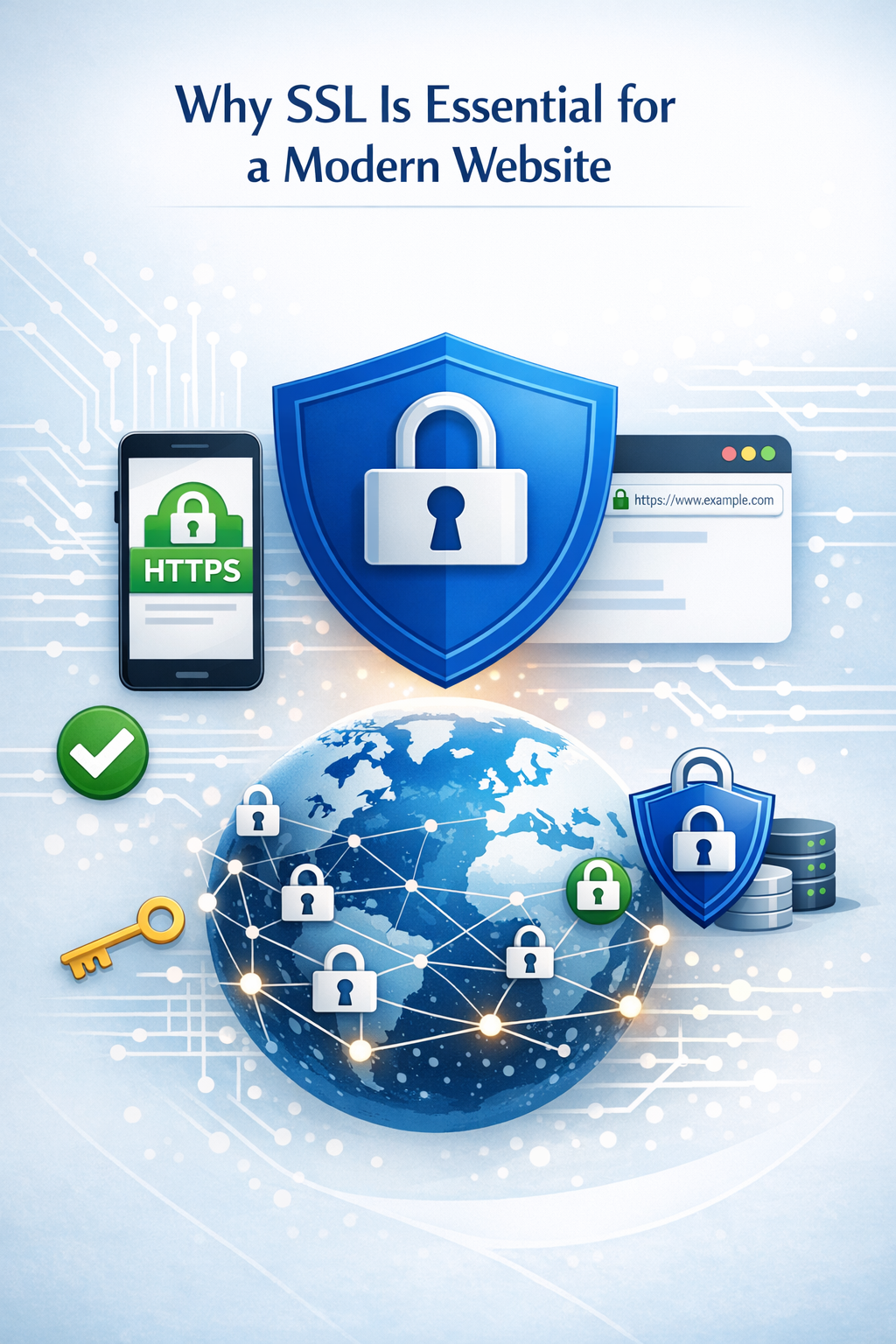
Infographic showing SSL benefits for modern websites with HTTPS padlock, secure browser, and global protection

Why SSL Is Essential for a Modern Website

SSL is a core part of today’s web standards. It protects every interaction on your site, keeps customer information private, and ensures visitors connect to the real version of your website—not an imitation. Search engines and browsers now expect every site to use HTTPS, and websites without SSL often lose trust, traffic, and ranking. By securing your site with SSL, you strengthen your brand’s credibility, improve performance, and create a safer experience for your customers.

What this adds to your page

  • Reinforces your authority as a website‑building platform

  • Adds topical depth Google can index

  • Connects SSL to modern browser expectations

  • Strengthens your SEO cluster around security and trust

Why this helps ranking

Google rewards pages that:


To continue building a secure and professional online presence, explore our website builder, browse templates, or learn more about domain privacy—all included with every Keasites website.